Podcast Aura is a free web toy from The Podcast App that turns your listening habits into a shareable card. You pick a listening mode, nudge a few sliders — playback speed, queue chaos, curiosity, offline stash — and it generates a named listener "type" with a caption and image you can post or send to friends.
Podcast Aura Shareable card maker
Make a listener card in a few taps.
| Piece | What it is |
|---|---|
| Aura | Product surface on The Podcast App site / app story |
| Core player | Still free — unlimited offline; Premium ≠ downloads |
| Ads | No app-inserted ads on the free player |
Last updated: September 6, 2026
Preset or randomize, tweak a slider, then share the exact card with a synced link and PNG.
Open a shared link and you land on that exact card state, ready to remix.
Controls
Shape the card
Quick start presets
Fastest way in. Pick one, then fine-tune below.
4 presets
Built for signal between stops, crosswalks, and coffee lines.
slow burndoubletime
meticulousferal
just vibeswith receipts
stream it livebunker mode
Brain mode
Flip this on if you are the friend who remembers contradictions, themes, and exact moments.
Card ready to share.
Live preview
Rush Hour Cartographer
AURA-0001
Tap a preset, tweak a slider, then share. The link updates automatically as the card changes.
You move fast, stay weirdly organized under pressure, and treat every walk like a small research session.
Ready-to-post caption
I got Rush Hour Cartographer on Podcast Aura. What is your listening type?
What is Aura in The Podcast App?
How Podcast Aura turns your listening style into a shareable card
Podcast Aura turns the shape of how you listen into a single shareable image, the same instinct behind year-end music wrapped cards but built as an always-on web toy instead of a once-a-year recap. Instead of pulling a fixed year of streaming data, Aura asks you to describe your own listening style through a listening mode - Commuter, Deep Dive, Night Owl, Rabbit Hole, Calm Reset, or Speed Demon - and a handful of sliders for playback speed, queue chaos, curiosity, and offline stash. The result is a named listener type, like Rush Hour Cartographer or Receipt Gremlin, paired with a short caption and a generated card image.
Everything happens on-device, right in your browser tab. Moving a slider redraws the canvas instantly using the same page already loaded in front of you - there is no server call to compute your card, no account to create first, and nothing about the process depends on The Podcast App knowing anything about you in advance. The entire card state, including which preset and slider values you chose, is encoded directly into the shareable link itself, so anyone who opens that link renders the exact same card locally in their own browser rather than fetching your data from a database somewhere.
Sharing is built around how people actually pass images around: Share card opens your device's native share sheet, Copy link grabs a URL that reproduces the identical card for whoever opens it, and Download PNG saves a fixed image that will not change even if the original creator later tweaks their sliders. One-tap buttons post straight to X, Reddit, WhatsApp, LinkedIn, and Facebook, and a ready-written caption sits right next to the card so you are not stuck writing your own copy. Anyone who opens a shared link can also remix it - moving a slider there only changes their own copy, never the original card.
The privacy angle is straightforward because there is nothing to protect: Aura never reads your real playback history, never connects to your Podcast App account, and never sends analytics about your actual listening back to a server. What ends up in a shared card is only what you deliberately chose to represent about yourself, summarized into a caption and a visual style, not a log of what you actually played and when. That is also why people enjoy comparing auras with friends - like swapping a music wrapped card, it turns a listening habit into a quick, low-stakes way to compare listener personalities without anyone handing over real private data to do it. Two people can start from the same six sliders and land on completely different names, captions, and colors, which is exactly the kind of small, low-stakes comparison that makes a card worth sending in a group chat in the first place.
Further reading
Sources and further reading
- Apple PodcastsApple's official podcasts app/platform homepage
- SpotifySpotify homepage (podcasts + music listening)
- Pocket CastsCross-platform podcast player (Automattic)
- Podcast IndexOpen, independent podcast index and API
- Listen NotesPodcast search engine and API
- Edison ResearchLeading US audio/podcast audience research firm
- PodnewsDaily global podcast-industry news of record
- The Podcast Academy (The Ambies)Membership body behind the Ambies awards
In your language
The Podcast App, running in this language.
These are real screens from the app, not mockups. Every menu, button, and label is translated, so the app looks like this as soon as you install it.
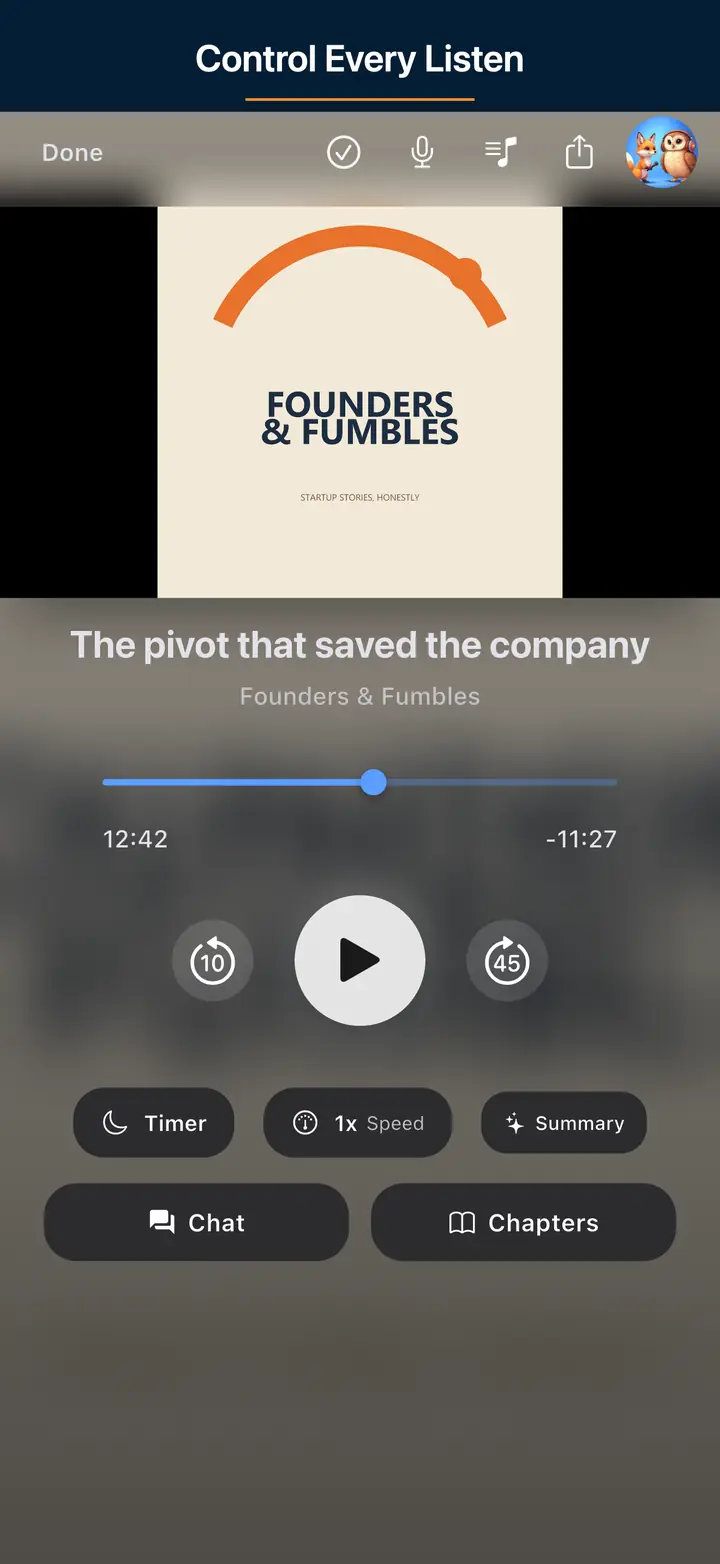
The audio player screen 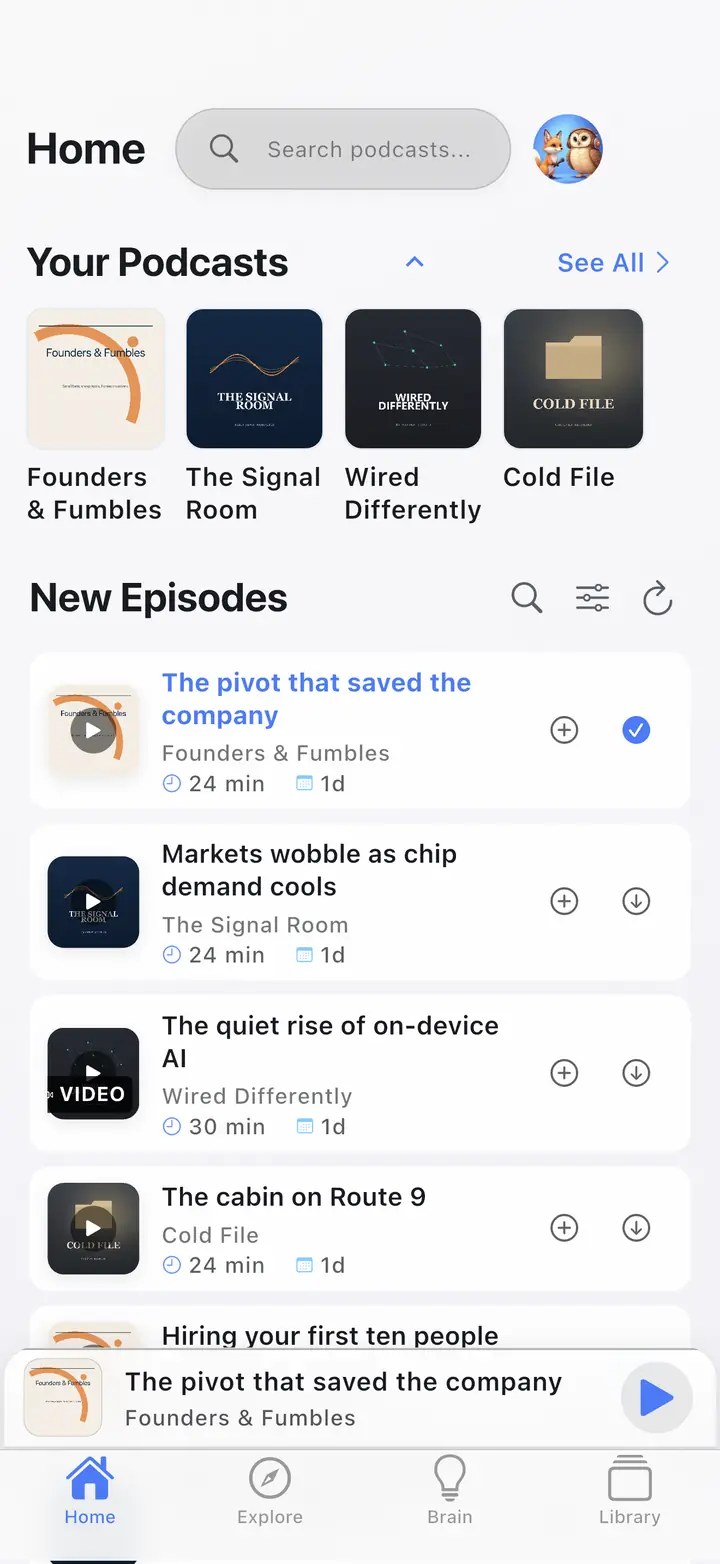
The home screen 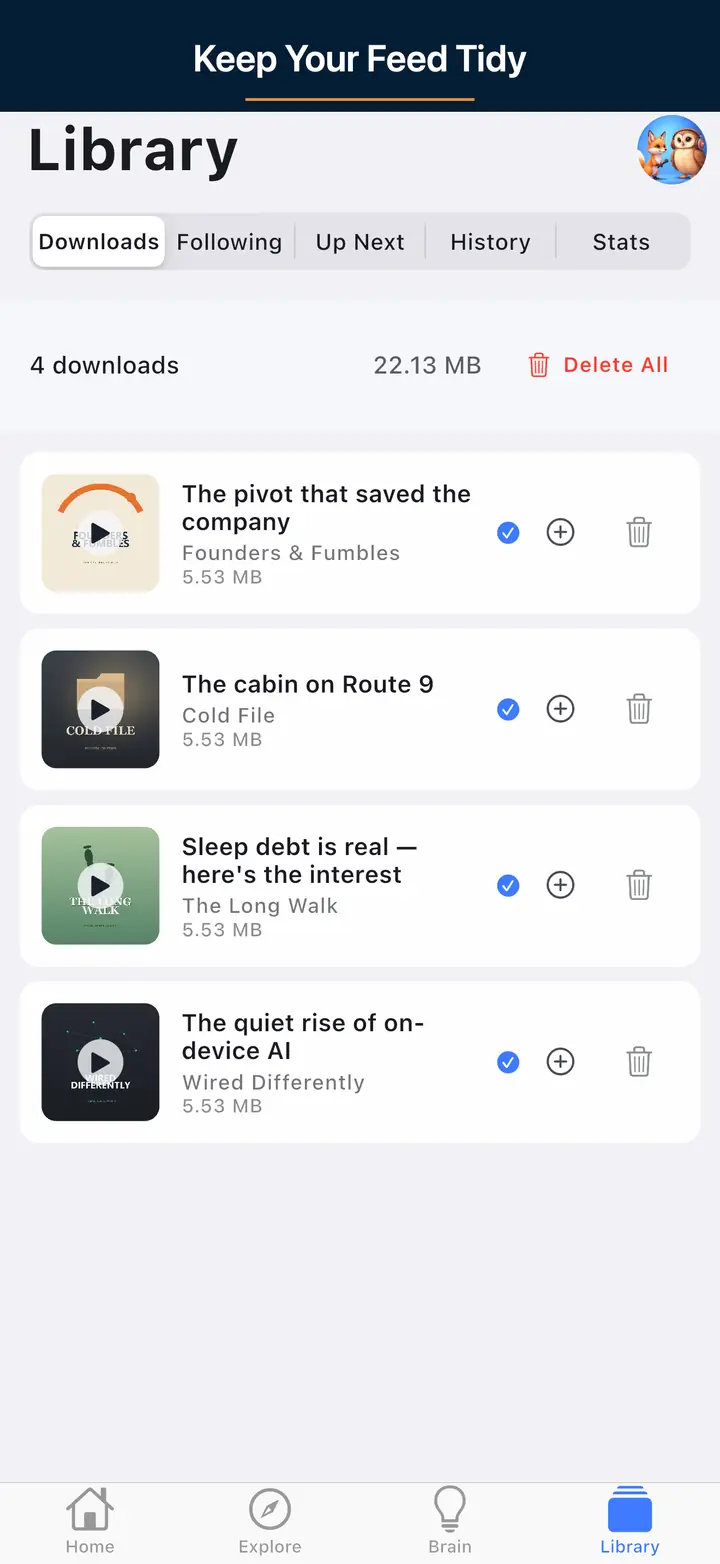
The downloaded episodes screen 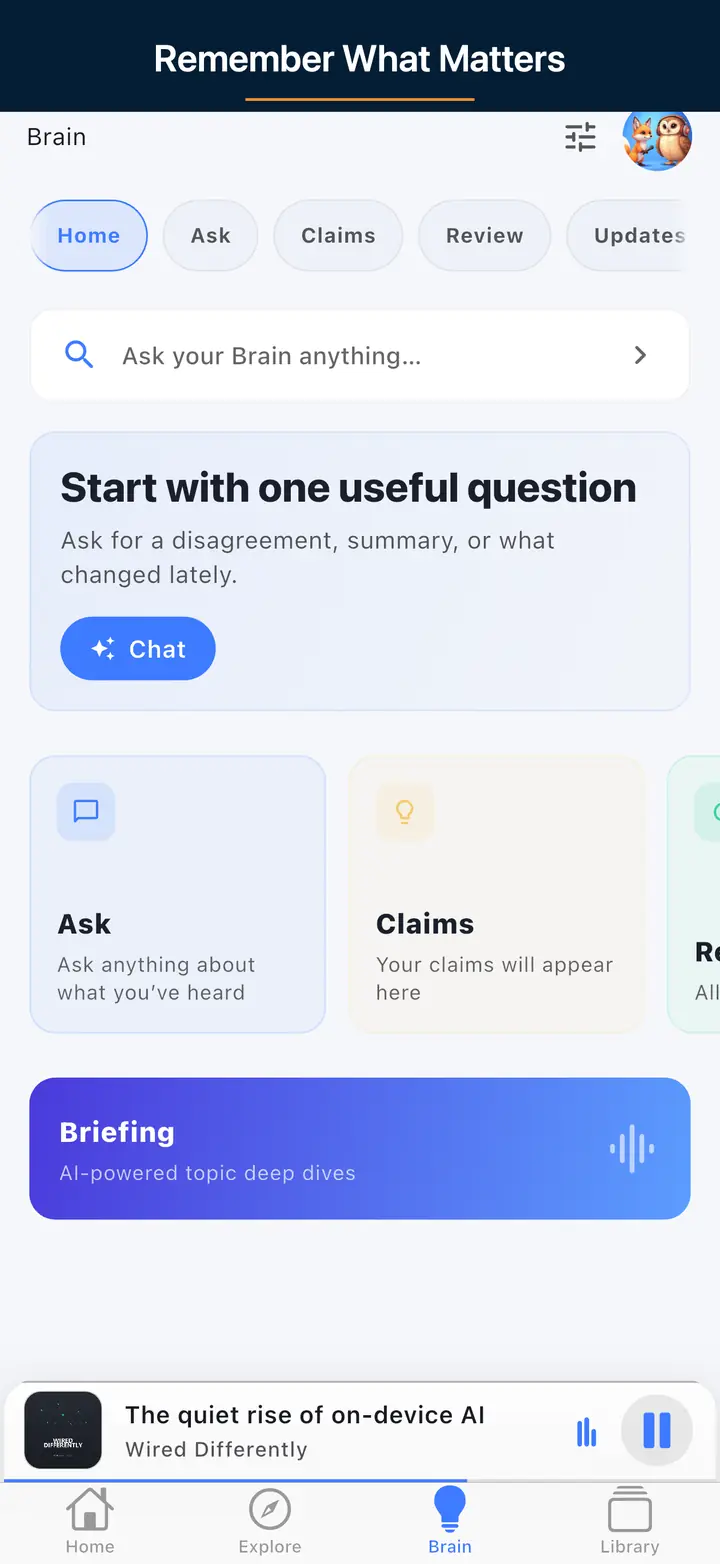
The AI assistant screen
FAQ
Your Questions, Answered
Open the studio, tap a preset like Commuter or Deep Dive, then fine-tune the sliders until the card feels like you. When you are happy, use Share card, Copy link, or Download PNG. There are one-tap post buttons for X, Reddit, WhatsApp, LinkedIn, and Facebook, plus a ready-to-post caption you can copy.
No. Aura runs in your browser with no sign-in and no download required. The card state lives in the shareable link itself, so anyone who opens your link lands on the exact same card, ready to remix. The Podcast App is a separate free download if you want the actual player afterward.
No. Aura does not connect to your accounts or analyze your actual play history. You set the vibe manually with the sliders and presets, so the card reflects the choices you make in the studio rather than tracked data. That is what keeps it a lightweight, no-sign-in web experiment.
Your link encodes a specific card state, so it keeps showing that card when someone opens it. When a friend opens the link and moves a slider, they are remixing their own copy — your original link is unchanged. To capture a fixed version, download the PNG, which stays exactly as you made it.