Deleting your account is distinct from uninstalling the app or clearing local storage, and the difference matters for anyone deciding between the two. In-app deletion (Library, then Settings, then Delete Account) triggers a server-side removal of your cloud-synced profile: subscriptions, queue, favorites, playback history, and positions tied to your account are removed from our servers, typically processed immediately. Uninstalling the app alone only removes the local copy on that device and does not touch anything synced to your account.
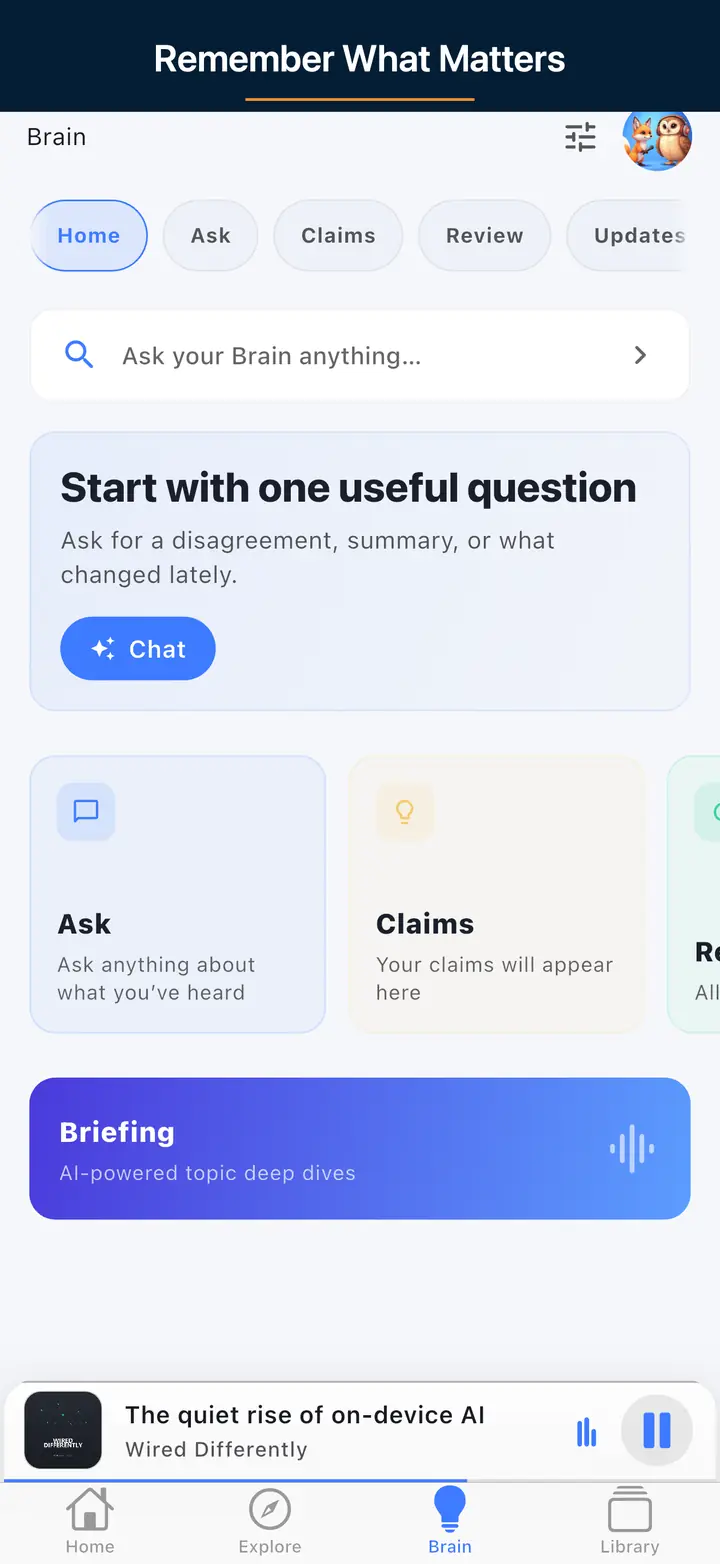
If you used the optional Premium Podcast Brain, account deletion also removes the AI chat history and transcript artifacts tied to your account specifically, not the underlying transcript cache other users' queries may share, since that cache is not keyed to your personal identity. This is why de-identified data can persist even after a full account deletion: it was never linked to you in a form that identifies you once your account record is gone.
Account deletion does not automatically cancel a store subscription, since Apple and Google manage billing separately from the app account itself. If you deleted your account but still have an active Premium subscription, the charge continues until you cancel it directly in the App Store or Google Play subscription settings; deleting the account does not stop that billing on its own, which is a common point of confusion worth checking before you delete, since the two systems are not linked automatically.
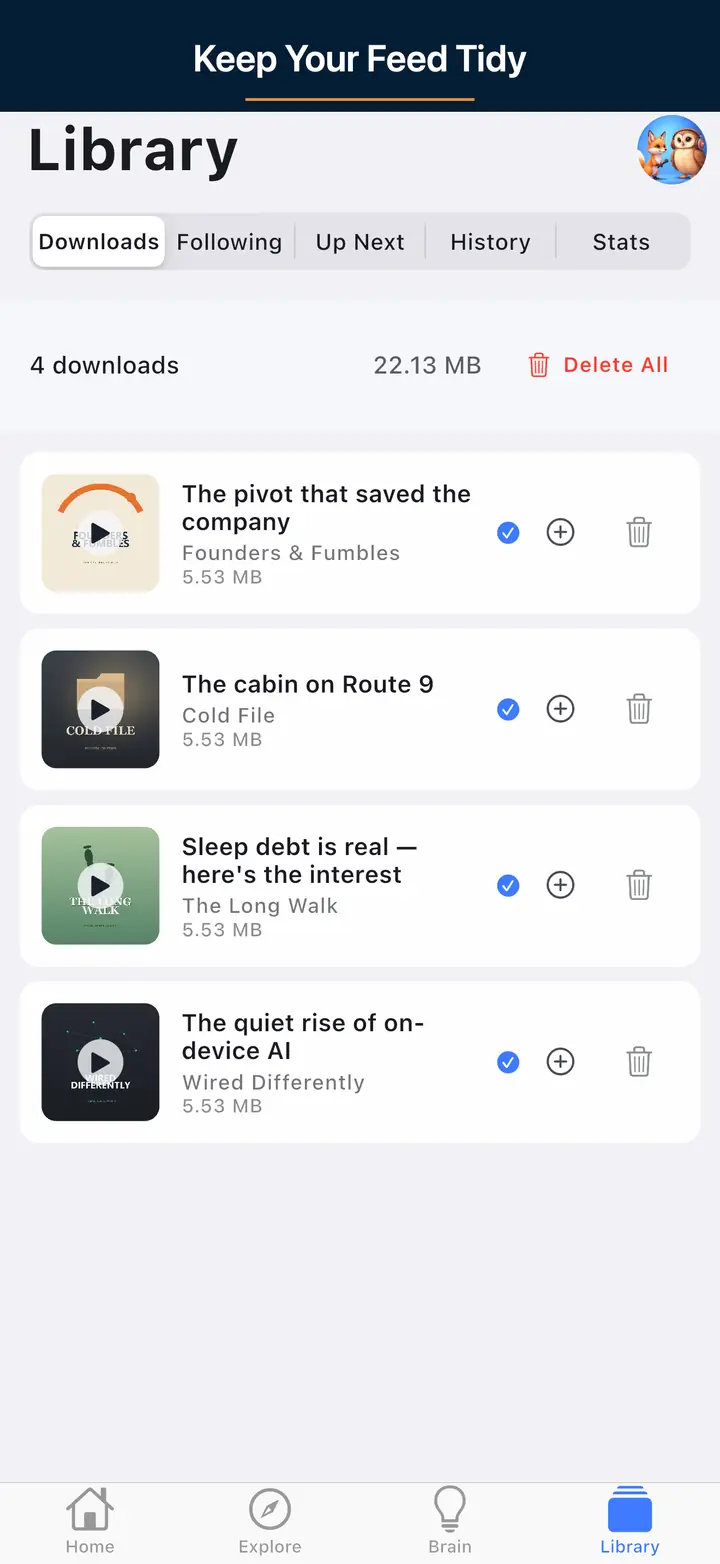
The email request path is the fallback for anyone who cannot access the app anymore, such as after a phone is lost, sold, or reset, and it typically completes within 72 hours after we can verify the account email matches. Store transaction records required for financial or legal compliance, and any downloaded audio files still sitting on a device after uninstall, are the two categories that are not touched by either deletion path and need separate action: cancel the subscription in the store, and remove local files by uninstalling the app itself.